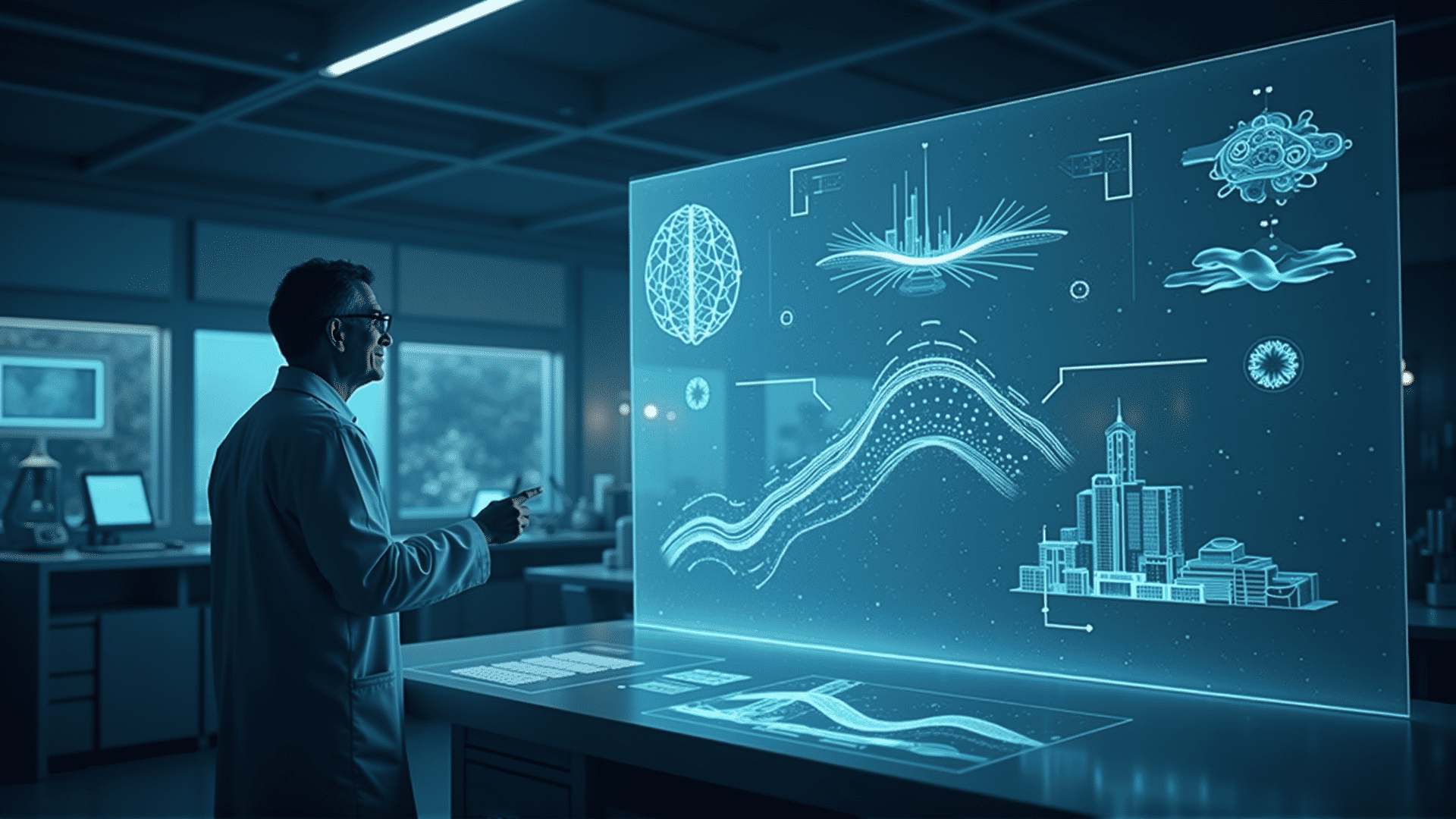
In the evolving landscape of scientific research, Artificial Intelligence (AI) is emerging as a transformative force, reshaping methodologies and enhancing capabilities across various disciplines. From biology to astrophysics, AI is driving innovation, accelerating discoveries, and opening new frontiers for exploration. By leveraging data-intensive techniques and powerful computational tools, researchers are able to conduct studies that were previously unimaginable, pushing the boundaries of human knowledge.
At the core of this transformation are cutting-edge AI algorithms, such as machine learning and deep learning, which enable the analysis of large volumes of data with remarkable precision and speed. These technologies can identify patterns, make predictions, and generate insights that would be difficult, if not impossible, for humans to discern unaided. For example, in genomics, AI algorithms can rapidly sequence DNA and identify genetic markers for diseases, leading to advancements in personalized medicine and targeted therapies.
Moreover, AI is revolutionizing drug discovery by drastically reducing the time required to identify potential candidates for development. Traditional drug discovery processes are notoriously slow and costly, often taking over a decade to bring a new drug to market. AI tools, however, can screen millions of compounds for potential interactions with biological targets, identify promising molecules, and optimize them for efficacy and safety, all in a fraction of the time. This acceleration not only cuts costs but also brings life-saving treatments to patients faster.
In the realm of environmental science, AI is aiding researchers in monitoring climate change and predicting natural disasters with greater accuracy. Sophisticated AI models are capable of processing satellite imagery and sensor data to forecast weather patterns, track deforestation, and monitor ocean health. These insights enable governments and organizations to implement timely interventions and adapt to changes, mitigating the impacts of environmental challenges.
AI is also making significant strides in the field of astrophysics. By analyzing vast amounts of data from telescopic surveys, AI systems are helping scientists detect exoplanets, understand cosmic events, and map the universe with unprecedented detail. The ability of AI to process and interpret complex, high-dimensional data is proving indispensable in unraveling the mysteries of the cosmos.
Furthermore, AI-driven automation is streamlining research workflows, allowing scientists to focus on higher-order challenges rather than routine tasks. Automated systems can manage laboratory operations, handle dangerous or repetitive tasks, and even autonomously design and conduct experiments. This not only enhances efficiency but also reduces the potential for human error, ensuring more reliable results.
Despite these advances, the integration of AI into scientific research is not without challenges. Ethical considerations, data privacy concerns, and the need for transparency in AI decision-making processes are critical issues that must be addressed. Researchers and policymakers must work together to establish guidelines and standards that ensure AI technologies are implemented responsibly and inclusively.
Overall, the adoption of AI in scientific research heralds a new era of discovery, where the synergy between human intelligence and machine learning propels science into new dimensions. As AI continues to evolve, it promises to not only accelerate the pace of research but also enhance our understanding of the world and the universe at large. By embracing these technologies, scientists can unlock the potential for breakthroughs that may shape the future of humanity for generations to come.