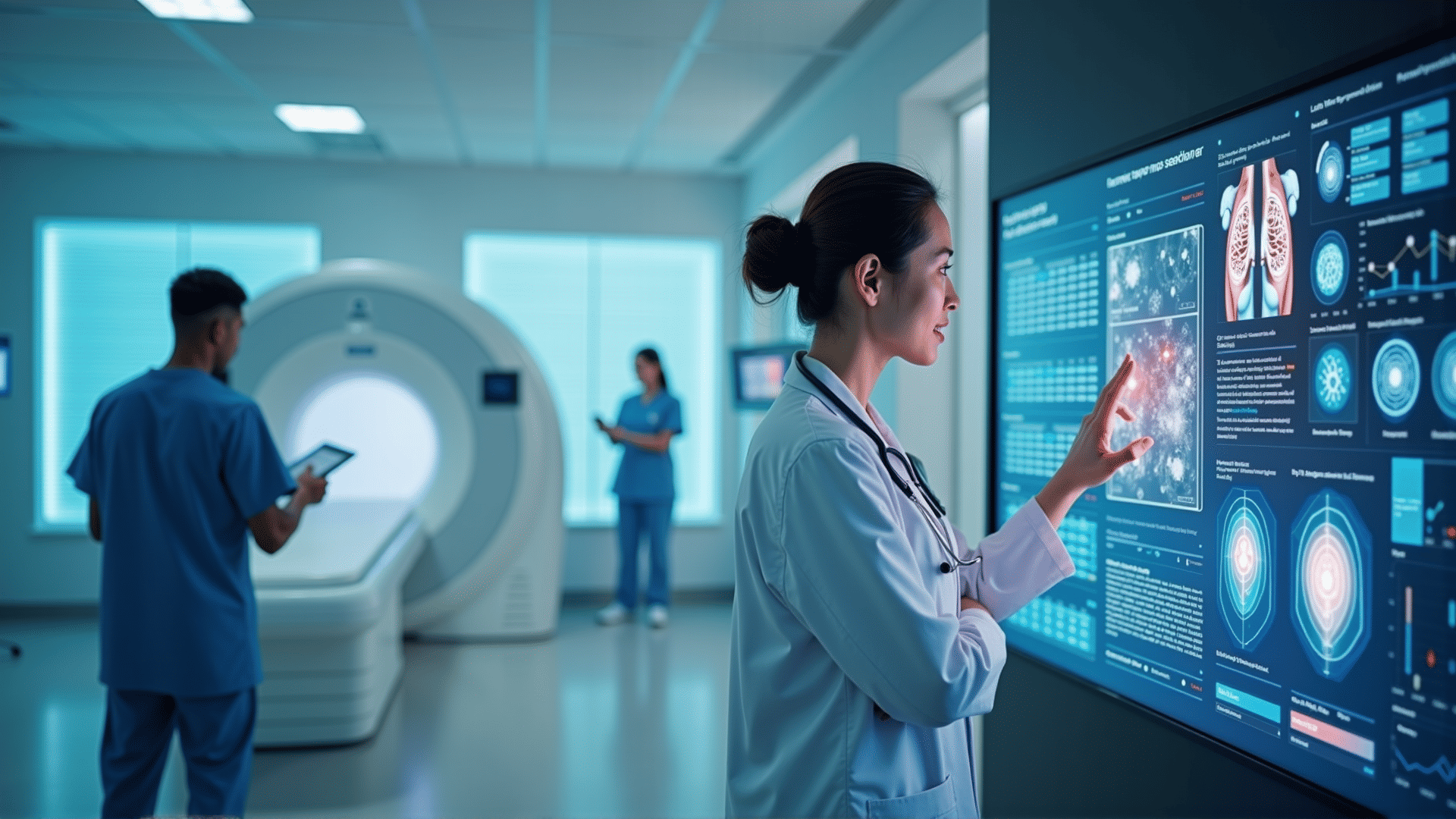
The advent of artificial intelligence (AI) is transforming various sectors, and medicine stands as one of the most promising fields poised for revolutionary change. The integration of AI into medical diagnostics has shown immense potential in improving diagnostic accuracy, minimizing human error, and steering the healthcare industry towards a new era of personalized medicine.
At the heart of this transformation is the capability of AI systems to process and analyze vast amounts of data with unprecedented speed and precision. These systems harness the power of machine learning algorithms, which can be trained using extensive datasets to recognize patterns and anomalies often missed by the human eye. For instance, in radiology, AI-powered tools have demonstrated an impressive ability to identify tumors in medical imaging more accurately than traditional methods. The technology reduces the likelihood of false readings, ensuring that patients receive timely and appropriate care.
Moreover, AI is proving invaluable in the realm of pathology. By assisting in the analysis of biopsy samples, AI tools can aid pathologists in diagnosing conditions such as cancer with greater accuracy. This collaboration between humans and machines ensures that minute details, which could be critical for diagnosis, are not overlooked. Furthermore, AI systems continue to learn and improve from each case, enhancing their diagnostic capabilities over time.
Human error is an inevitable aspect of healthcare, influenced by factors such as fatigue, bias, and stress. However, AI systems provide a consistent, objective, and tireless approach to diagnosis. By supporting healthcare professionals in their decision-making processes, AI reduces the risk of misdiagnosis and the consequent impact on patient outcomes. This leads to more reliable healthcare and builds greater trust between patients and medical practitioners.
Beyond diagnostic accuracy, AI is a cornerstone in advancing personalized healthcare. Traditional medicine often adopts a one-size-fits-all approach, which may not cater to the unique genetic, environmental, and lifestyle factors impacting individual patients. AI can analyze complex datasets including genomic information, lifestyle factors, and existing diseases to tailor treatments that meet specific needs. This personalized approach ensures better patient outcomes, increased treatment efficacy, and enhanced patient satisfaction.
Furthermore, AI in medicine extends beyond mere diagnostics and treatment personalization. It plays a crucial role in predictive analytics and preventive care. By analyzing patterns and trends within population health data, AI can predict potential outbreaks or the likelihood of future illnesses in individuals, allowing for earlier intervention and better resource allocation.
Despite the unquestionable benefits, the implementation of AI in medicine does bring certain challenges. Concerns regarding data privacy, the need for extensive training datasets, and the potential for AI to replace human jobs require thoughtful approaches and regulatory frameworks. However, these challenges pale in comparison to the potential advancements AI offers in creating a more accurate, efficient, and personalized healthcare system.
In conclusion, the role of AI in enhancing diagnostic accuracy in medicine is transformative. By reducing human error and enabling personalized patient care, AI is paving a path toward a future in which healthcare is more reliable, efficient, and tailored to individual needs. As AI technology continues to evolve, the healthcare industry stands on the cusp of a profound transformation, with the potential to revolutionize how we diagnose, treat, and care for patients worldwide.